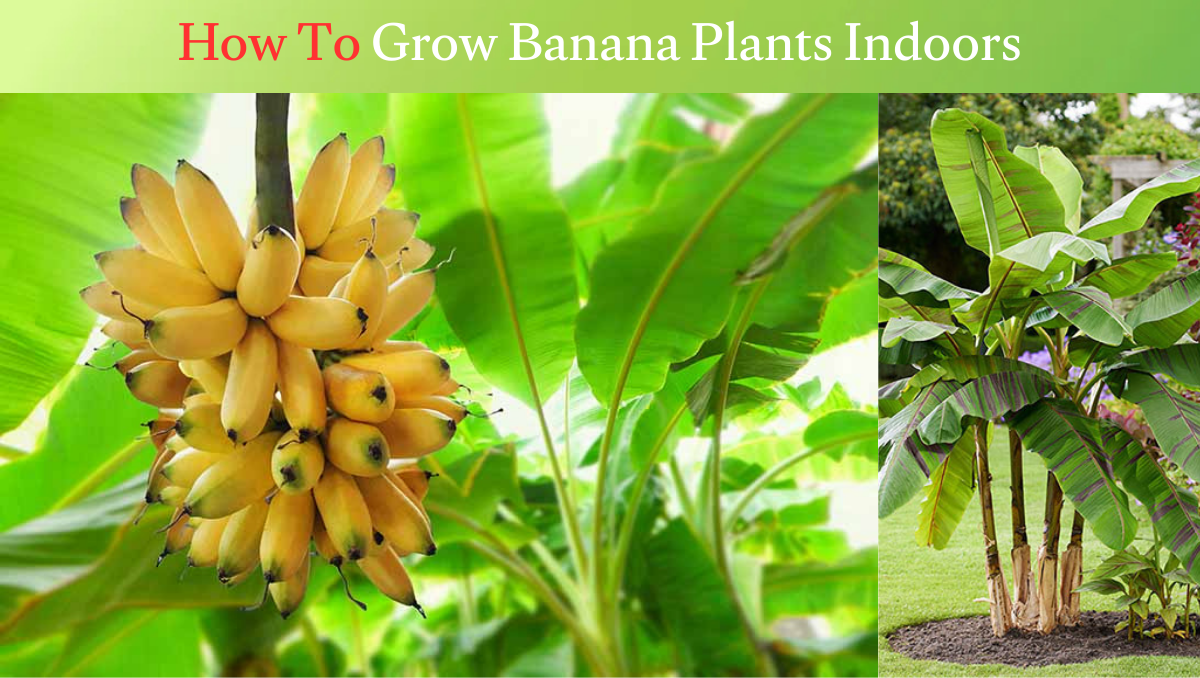
Growing banana plants indoors requires a sunny, warm, and humid environment. Preferably near a south-facing window. Use a well-drained, nutrient-rich potting soil, such as a mix of compost and perlite, and water frequently to keep the soil moist. Growing banana plants indoors is considered very easy. All it takes is a little effort, attention, and following the steps.Now the question is, is it possible to grow a banana plant at home? The answer is yes, absolutely. It is possible to grow a banana plant at home and it survives for a very long time as long as it gets adequate light and moisture. This continues to prove beneficial.
Table of Contents
How To Grow Banana Plants Indoors Successfully
To successfully grow banana plants indoors, choose a variety like Moss Dwarf or Kevin Dish and provide 12 to 16 hours of bright light per day and maintain a temperature of 65 to 80 degrees Fahrenheit for optimal growth. They need consistent humidity, water frequently daily, maintain a high humidity of about 60 to 90 percent, and fertilize biweekly during the growing season. For good growth and yield, the crop requires a balanced fertilizer such as 10:10 NPK ratio. Nitrogen is essential for early growth and potassium promotes disease resistance and flower development, which is very effective for early plant growth.
Also Read: Grape
Key Takeaways
There are many tips for growing banana plants at home, which if understood well can be very beneficial to you. Here are a few of them:
- For the best banana yield and to grow indoors, choose a dwarf banana variety.
- Provide your banana plant with six to eight hours of direct sunlight every day, which will have a great impact on its health.
- Always use an open container to plant your banana plant, one that has drainage holes and holes for water flow.
- For optimal growth of banana plants, keep the soil moist but avoid overly wet conditions.
- Maintain the proper temperature for optimal growth of banana plants and the proper temperature is 65–85°F (18–29°C).
- If your plant’s leaves have also started to turn brown, the most common reason for the edges to curl is that your plant is lacking water. Increase its humidity.
- For rapid plant growth, apply fertilizer regularly and in the right amount during the growing season. This will enhance plant growth.
- It is also possible to grow fruit on a banana plant indoors, but the most common result is green leaves.
Understanding Banana Plants Indoors
Banana plants may look like trees, but they are actually large herbs with a soft, woody stem, like a siu siu stadium. Indoors, they grow with broad, dramatic leaves that grow straight up and down, and can quickly become the centerpiece of any room. However, their nature means that they require specific conditions to stay healthy, primarily strong light, warmth, and fairly low humidity. When grown indoors, banana plants generally focus on producing green foliage rather than fruit. Fruiting is possible, but it requires consistent feeding and plenty of space for the plant to mature. Even without bananas, indoor plants can be impressive, beautiful, and grow quickly when properly cared for. This is a great and exciting hobby that you will enjoy a lot.
Best Banana Varieties for Indoor Growing
There are many types of banana plants, but some types are very good for growing at home. All of them are listed below.
- The best banana species and varieties to grow indoors Is Dwarf Cavendish
- And there is another excellent type of banana to grow at home Is Dwarf Brazilian
- This is another excellent type of banana to grow indoors. Many people use it to grow indoors and it proves to be very good This Type Is Super Dwarf Banana
These are the types of banana plants that you can easily plant at home, which will give you good results and fruits after a little effort. With this, you can easily use them to enhance the beauty of your home and get good bananas with proper effort and attention.
Step-by-Step Guide to Growing Banana Plants Indoors
There are many basic steps to grow banana plants at home. If you follow these steps, you can easily grow a banana plant in your home, which will add to the beauty of your home. Those steps are listed below in more detail.
Choose the Right Variety
The best types of banana plants for indoors are compact and ornamental varieties that thrive in pots and warm sunny conditions. All Angels Choice includes Draft, which grows to about six to eight feet tall, and Cane Dish, Super Draft, which grows to about three feet tall, and Trillidini, another type of banana plant that grows to about two to three feet tall. These include all of these, which can produce edible fruit and are ideal for fast-growing plants. Choose a seasonal tribe and choose a plant type that is adaptable to your environment and your current needs.
Also Read: How To Grow Rosemary Plants Indoors – Easy Secrets for Fast Growth & Healthy Plants
Select a Large, Stable Container
To successfully grow banana plants indoors, choosing a large and sturdy container is essential due to their fast-growing and extremely heavy nature. Mature indoor plants require containers that have a capacity of about 15 to 25 gallons. To accommodate the extensive root system, the pot should ideally be 20 to 24 inches deep and 20 to 25 inches wide. For growing a typical banana plant indoors, the right choice of container plays a major role in the optimal growth of the banana plant.
Use Rich, Well-Draining Soil
Banana plants require rich, well-draining soil that is consistently moist but never waterlogged. The ideal soil for bananas should be loose and nutrient-rich, with a pH between 5.5 and 7.0. Since they are rot-tolerant, they benefit from a soil amended with plenty of organic matter, such as compost or well-rotted manure. Banana plants require rich, well-drained soil. Water deeply and regularly, but avoid overwatering your banana plant or allowing the soil to become waterlogged, which can lead to root rot.
Provide Proper Light
Banana plants need bright sunlight to thrive. They typically need six to eight hours of direct sunlight per day. They are sun-loving plants that grow fastest in full sun, although they can tolerate partial shade. Most varieties of banana tree plants prefer to grow in full sun, meaning they need at least six hours of direct sunlight most days. However, the more sunny varieties can burn quickly and do better in a spot with plenty of indirect light in partial shade. They tolerate indirect light levels better than a minute dish of moss in front of them.
Water Correctly
Banana plants need deep watering to keep the soil moist but not waterlogged as they are 80 percent water sensitive to root rot. Water daily two to three times a week in hot and growing seasons and reduce the frequency to one to two times a week in winter. Pay attention to watering at the base to avoid leaf disease and they prefer moist soil but not waterlogged soil as over watering can rot the roots and water the plants deeply allowing the water to penetrate the soil and prevent re-watering.First, wait for the top two and a half centimeters of soil to dry out. You should usually water your banana plant once a week, but more often during hot or dry weather.
Maintain Ideal Temperature
Banana plants require temperatures ranging from 75 to 95 degrees Fahrenheit for normal growth, which is about 24 to 35 degrees Celsius. They thrive in these temperatures, requiring maximum humidity and protection from drafts. Growth slows significantly below 57 degrees Fahrenheit and 14 degrees Celsius, and cold temperatures can cause top dieback. To ensure healthy, productive plants, avoid extreme fluctuations and maintain consistent warm conditions that will help promote good plant growth.
Also Read: How to Grow Indoor Bamboo Plant – Easy Tips for Healthy Green Bamboo All Year
Increase Humidity
Banana plants grow quickly in constant humidity, which can be difficult in dry indoor environments, but humidity often causes the edges of the leaves to become brown and curl. Here’s what you can do to increase the humidity around your plant.
- You can use a nearby humidifier to maintain constant humidity of the plant, which helps us maintain its constant humidity at all times and does not disrupt the growth of your plant.
- To increase the humidity near your plants, you can put water and pebbles in a tray and place it near the plants. This will evaporate and increase the amount of humidity in the environment around your plants. This is very good.
- Plant a group of banana plants together and they naturally increase humidity through mutual transpiration, meaning one plant helps provide moisture to the other.
- Constantly misting the banana plant’s leaves can help, but it is less effective and less beneficial than constant ambient humidity, so it is not as beneficial.
Maintaining high humidity for your banana plant helps your banana plant develop large, healthy leaves and reduce stress, especially in the winter when indoor heating dries out the air.
Fertilizing for Fast Growth
Banana plants require frequent feeding for optimum growth, especially during the spring and summer growing season. Apply a balanced high-potassium fertilizer, such as 8 to 10 8:10 or 2:3 NPK ratio monthly. For young, fast-growing trees, apply 0.25 to 0.5 pounds of fertilizer-free fertilizer monthly. This is very effective for the plant.
Pruning and Maintenance
The plant requires minimal pruning, which typically involves removing dead or diseased canes at the base with a sharp knife. Key maintenance includes selecting a strong sucker to replace the main one-time fruiting stem, which should be cut back after harvest. Regular watering, heavy mulching, and monthly fertilization are essential for optimum NPK levels.
Common Problems When Growing Banana Indoors
Many people often face difficulties and make mistakes when growing banana plants at home. These difficulties are as follows:
- Leaf curling is usually caused by low humidity or indoor air. Most people face this problem.
- Yellowing of plant leaves is usually caused by poor drainage and overwatering.
- Leaf drop is a problem that many people also suffer from. It can be the result of falling underwater or sudden changes in temperature, which causes the plant to drop its leaves.
- Most often, plant growth slows down due to low light. This problem is caused by too much or too little sunlight.
- The common cause of yellowing or shrinking of plant leaves is nutrient deficiencies and lack of light.
- Leaf cracking is also a common problem. Most people suffer from this problem. It is natural to some extent, but excessive cracking indicates stress, as your plant has suddenly gone from hot to cold and from cold to hot weather.
- Plant bending towards the light is also a common problem that many people face. This is due to uneven exposure to light, which often causes the plant to bend towards the light.
- Bananas not bearing fruit at home is a common problem that many people face, but it is possible that bananas can provide a solution at home. Usually, this problem arises due to limited light, low humidity, or the immature age of the seedlings.
There are many small problems that people often face when growing plants at home. These can be solved with a little effort. All you need to do is provide the plant with the right amount of food, sunlight, and water. All these problems can be solved.
Also Read: How To Grow Rosemary Plants Indoors – Easy Tricks for a Fresh, Fragrant Herb All Year
Common Mistakes to Avoid
Many people face many difficulties and make many mistakes while growing banana plants at home. The mistakes that you should avoid are as follows:
- Choosing the Right Type of Banana Plant Choosing an outdoor variety makes quality banana plants grow faster indoors.
- Providing the plant with little or not enough sunlight can stunt the plant’s growth and cause small leaves. Always avoid this mistake.
- Watering the plant too much before planting also causes root rot.
- Allowing the soil to dry out completely can also cause serious damage to the plant as the aloe plant prefers consistent moisture.
- Using pots that are too small and narrow will inhibit root growth and cause the plant to tip over.
- Ignoring the water-logged holes in the soil: When water stagnates in the roots, the plant’s roots are severely damaged.
- Failure to provide the plant with complete and timely nutrition and fertilizer is also the biggest cause of plant disease because banana plants require a large amount of nutrients.
- Ignoring the moisture on the surface of the plant’s soil is also the biggest mistake. Dry air can cause the edges of the leaves to curl.
- Moving a plant suddenly from cold to warm to cold weather is also the biggest mistake. Moving a plant suddenly to a room with a hot heater or an air-conditioned room is the biggest mistake. Always avoid this mistake.
- It is also a big mistake to expect instant fruit from a banana plant indoors because the banana plant grows very slowly and produces fruit after a long time. Always be patient and create ideal conditions to get fruit.
If you follow all these things and avoid these mistakes, you can have an excellent banana plant and banana fruit in your home that will give you great enjoyment.
Indoor vs Outdoor Banana Growing
A banana plant can grow anywhere, indoors or outdoors, but the method of caring for it is completely different. Below are the methods and things needed to grow it in both ways.
Indoor Banana Growing
Indoor banana plants need about six to eight hours of bright direct sunlight. They need a consistent temperature of 75 to 95 Fahrenheit in a southeast-facing window and high humidity above 50 percent. Use well-drained, nutrient-rich soil and water when the top inch of soil is dry to allow for drainage to prevent root rot. Dwarf varieties such asare the best varieties for banana Musa acuminata and Drawrf plants.
Outdoor Banana Growing
Outdoor banana plants thrive in full sun, well-drained soil and high humidity with protection from wind. Plant in late spring after frost. Provide the plants with plenty of space up to three metres apart. They require monthly fertilization and should be wrapped in fleece every winter in cold climates. This will help them grow very well and is very beneficial.
Final Thoughts
Banana plants are remarkable fast-growing and prolific plants in the garden, offering a lush and often edible aesthetic. However, they are technically large herbaceous perennials, not trees, meaning their main proportion only lasts for one growing season. Always ensure that you have the right soil, container and fertilizer for growing a banana plant, whether indoors or outdoors, and it will provide you with extremely effective and beneficial results and help you provide a sweet and delicious fruit.
Can I grow a banana tree indoors?
Indoor bananas need to be positioned in a bright room but without in direct exposure to sunlight.
How long do bananas take to grow indoors?
It isn’t common for them to fruit indoors and if they do, it may take 3-4 years.
What is the best way to grow bananas?
How To Grow Banana Plants And Keep Them Happy
Rich, dark, fertile soils.
Lot of nitrogen and potassium. (Chicken manure!)
Steady warmth, not too hot and not too cold. (Bananas are sissies when it comes to temperatures…)
Steady moisture, in the ground and in the air.
The shelter of other bananas!
Do banana plants need full sun?
Banana plants love full sun, heat, and humidity.
How long do indoor banana plants live?
Year 6+: End of Life. A banana tree can live for about 6 years, but after fruiting, they will appear to die.