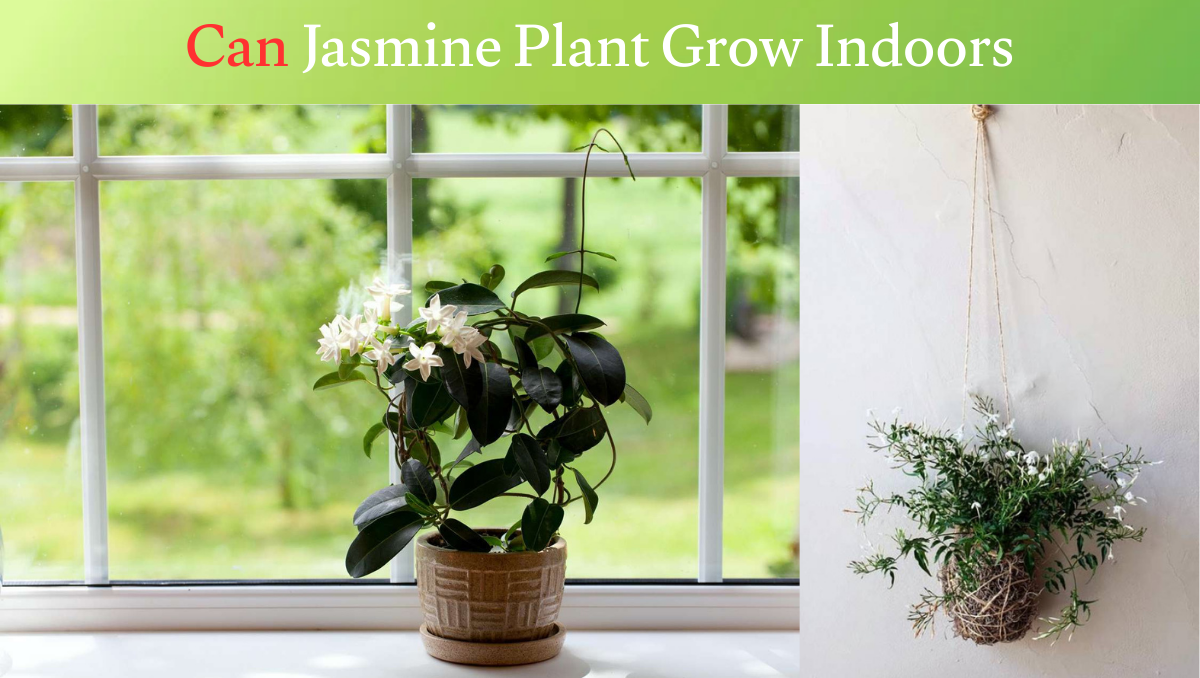
Can Jasmine Plant Grow Indoors? Many people think that jasmine plants do not grow indoors. This is completely wrong. The truth is that jasmine plants grow very well and in the best way indoors. Jasmine plants look great indoors as long as the plant does not wither, does not turn yellow, or does not look sad in the corner of the house. There are many benefits to growing this plant. It spreads fragrance inside your house and looks very good indoors. Many people wonder what is needed to grow it. To grow it, you need excellent light, water, and a little patience. And you can grow it indoors. Jasmine is one of the most popular plants.You can grow it indoors with a little care, whether you live in an apartment, a small house, or even your own home. If your home has low light, you can grow it indoors.
Table of Contents
How To Grow A Jasmine Plant Indoors – What You Need to Know First
Can Jasmine Really Thrive Indoors?
Yes, jasmine can flourish indoors, but only if you meet its basic needs. Now what are its basic needs? Its basic needs include good light, water, and a little patience and long-term care. Many people fail to grow jasmine in their homes because they think that it does not need much light, which is not the case at all. Jasmine needs a lot of light and air and it loves it. Jasmine grows very well indoors, but it grows a little slower than outdoors. And it is not that it will be less healthy than outdoors. It will be healthy and will give good flowers if you take good care of it.
Also Visit: Jasmine
Benefits of Growing Jasmine Indoors
There are many benefits of growing Jasmine indoors, such as Jasmine enhances the beauty of your home and it also provides oxygen to your home along with its beauty. Jasmine also spreads fragrance throughout your home and if you keep it in your bedroom or wherever you sit, it spreads fragrance there and it looks very peaceful lying in the house and a person gets happy by looking at it.Jasmine plants are soothing to look at. Jasmine also adds a touch of greenery that instantly enhances interior spaces and brings fragrance, beauty, and comfort to your home all year round.
Key Takeaways – Quick Summary for Busy Gardeners
Those who don’t have enough time to read the entire article can get the guide here:
- Jasmine can grow well indoors if it is given light and care.
- To grow jasmine plants best indoors, place them in a bright window.
- Use pots and soil with good drainage so that the roots don’t have any problems.
- Water the jasmine plant only when the soil is dry otherwise do not water it
- Indoor jasmine prefers warmth and normal humidity.
- Regular pruning of jasmine helps the plant grow healthier and more vigorously.
- Choose the best varieties for indoor jasmine, such as Arabian jasmine.
- With patience and consistency, the jasmine plant will start to flower.
If you are growing a jasmine plant and you take care of these things, your jasmine plant will grow perfectly indoors.
Best Jasmine Varieties for Indoor Growing
Arabian Jasmine (Jasminum sambac)
The Arabian variety is the best variety for growing jasmine indoors and it adapts to the home environment and it grows indoors. It is much better than the outdoor variety because it grows indoors in your bright window and has a very nice fragrance and produces white flowers with yellow leaves. Its flowers are small and it prefers warm temperatures, constant light and light pruning which makes it ideal for beginners and it will grow indoors with just a little care.
Common Jasmine (Jasminum officinale)
Another type of jasmine is the common jasmine. It also grows well indoors. It is a vine that grows outdoors, but with a little effort and patience, it can be grown indoors in a small pot. Its flowers are soft and light, and its fragrance is pleasant. This jasmine can be grown indoors.Common jasmine may bloom less frequently than Arabian jasmine indoors, but regular pruning, good lighting, and good care can improve flowering. Don’t mind paying more attention to it.
Dwarf & Compact Jasmine Types
The Dwarf and compact jasmine varieties are a great option for indoor gardeners and can grow in a small space. If you are short on space or prefer low-maintenance plants, this is a great option for you as they do not require much maintenance. These varieties are bred to stay small, making them ideal for apartments, homes, and window sills.If you are new to growing plants and you want to grow them in a small space without requiring much care, then dwarf and complex varieties are a great choice for you.
Also Read: Can You Grow Strawberry Plants Indoors In 2026 – Easy Step-by-Step Guide for Juicy Berries All Year!
Step-by-Step Guide to Growing Jasmine Plants Indoors
Follow these points to grow jasmine plants at indoors:
Step 1 – Choosing the Right Pot and Container
Choosing the right pot and container can go a long way in growing jasmine plants. Always choose a pot that is small and has good drainage because the soil inside a large pot can remain wet for a long time, which can cause the roots to rot and your plant may fail to grow. Therefore, always use a pot that does not hold water for a long time, has good drainage, and uses less soil so that the soil does not remain too wet and the plant can grow optimally in your home.
Ideal Pot Size
The pot plays a very important role in growing indoor jasmine. You do not need a pot that is too big or too small, but a medium pot because a pot that is too big holds water for a long time, which can cause the roots to rot, and a pot that is too small does not allow the roots of the jasmine plant to spread, which can hinder its growth. Therefore, try to get a pot that is 8 to 10 inches wide and deep, in which the jasmine plant can grow well. When your jasmine plant starts to fill up, you can also shift it to a larger container for one to two years.
Importance of Drainage Holes
To grow jasmine plants indoors, your pot should have drainage holes that help drain excess water out of the pot because excess water can rot the roots of your plant and cause problems with the growth and development of your plant, and it can cause the leaves of your plant to turn yellow. If you use a pot with good drainage, it will also increase the growth of your plant, keep it healthy, and produce more flowers and leaves.
Step 2 – Best Soil Mix for Indoor Jasmine
Soil plays a very important role in growing jasmine plants at home in the best way and in a healthy way because soil keeps the roots healthy and the plant produces healthy and good flowers and fruits, so choose the best soil. Generally, I prefer soil that is acidic because that soil remains mostly moist and helps in the growth of the plant. Therefore, try to use moist soil and use a drainage pot so that water does not remain in the soil for a long time, which can cause the roots of the plant to rot and the plant to die. Therefore, use a drainage pot so that the remaining water can drain out and the plant can grow easily.
Well-draining soil requirements
For the proper growth and development of the jasmine plant, it is very important to choose healthy soil and good soil. Always use soil that is slightly moist, i.e. acidic soil, because the jasmine plant prefers acidic soil. Do not add too much water to the soil because too much water can cause root rot and prevent the germination of the seeds. If the soil becomes dry, add a little water so that the soil is only moist because adding too much water can cause problems in the germination of the plant. Try to use a pot with good drainage.
Homemade vs store-bought mix
Both homemade mixes and store mixes have their own advantages.
Homemade mixes allow you to control each ingredient, ensuring it is well-draining and nutrient-rich. A simple mix of one part potting soil, one part compost, and one part light loam or sand can be great for gardeners who want to customize the soil for their plants’ needs.
Store-bought mixes are easy and ready to use, often labeled as indoor flowering plant soil or jasmine potting mix. They are usually well-balanced for drainage and nutrients, saving time and effort. Look for mixes with extra perlite or colite for better aeration.
Step 3 – Light Requirements for Indoor Jasmine
Best window direction
Jasmine plants need good light to grow, so you can place them in a south or west-facing window because the sun rises from the east and starts to shine. If you place them in a west-facing window, the sun will rise in the west and they will get good light. If you place them in a north-facing window, your plant may wilt because the north-facing window receives very little light.Jasmine plants require six to eight hours of light a day to grow healthily and optimally.
Using grow lights when sunlight is low
Sometimes in winter, there is a lot of sun problem. Some days, the light is less or the sun does not come out. Or if your house has small windows, you live in an apartment and there are no windows, then you can also use artificial light. You have to use full spectrum LED and fluorescent lights for this and you have to install them 8 to 12 inches above the plant and you have to keep them on for about 6 to 8 hours a day. This will keep the plant healthy and its leaves and flowers will remain healthy and will keep playing all year round.
Step 4 – Watering Schedule for Indoor Jasmine
How often to water
Water also plays a very important role in the growth of indoor jasmine plants. When you feel that the top one to two inches of soil has dried out, give it a light watering and water it enough so that the soil is just moist. Do not let water stand in the pot because standing water can cause the roots to rot and the plant to die.And don’t make a schedule for watering the jasmine plant, but rather moisten it slightly when the soil looks dry, because in winter the soil dries out after two to three weeks, so if you add too much water then it can hinder the growth of the plant.Water the jasmine plant once every two to three weeks.
Signs of overwatering and underwatering
Overwatering can cause the plant’s leaves to turn yellow, hinder the plant’s growth, and cause the plant’s roots to rot.
Underwatering can cause the leaves dry up and turn brown and start falling off and its growth slows down.
Also Read: How to Grow a Garlic Plant Indoors In 2026 – Easy Tips for Fresh Garlic at Home
Step 5 – Ideal Temperature and Humidity
Best indoor temperature range
To grow jasmine plants, it is also important to take special care of the temperature. Jasmine plants need a temperature of 18 to 24 degrees during the day, and make sure that the temperature does not drop below 10 degrees at night, because in cold weather below 10 degrees, the jasmine plant can wither and slow down its growth.
Increasing humidity naturally
Jasmine plants prefer high humidity to low humidity, so high humidity does not affect it, but rather increases its germination. Most dry houses have a lot of humidity problems, so if you plant more plants, humidity problems can be fixed because planting more plants creates humidity.
Step 6 – Fertilizing Jasmine Indoors
Best fertilizer type
Jasmine plants also need to be fertilized to grow or develop further, but for this, something special is used. Look for a fertilizer with a ratio of 10,10,10 or 20,20,20, which contains equal parts of nitrogen, phosphorus, and potassium. You can fertilize it to encourage flowering, but be careful to fertilize indoor jasmine once every three to four weeks because over-fertilizing can cause the plant to rot and die.
How often to feed
Take special care of feeding your indoor jasmine plant or even if you continue to fertilize it, it will still be great, but try to reduce the fertilizer or reduce the feeding or stop it altogether during the winter season, otherwise the plant may rot. Take good care of it and it will grow with perfect flowers and good leaves.
How to Encourage Jasmine to Bloom Indoors
Common Reasons Jasmine Doesn’t Flower
- Low light can also cause the blooming of jasmine plants.
- Improper pruning can also cause the growth of a jasmine plant.
- Over-fertilizing with nitrogen can also prevent your jasmine plant from growing.
- Temperature issues can also prevent your plant from flowering.
- Low humidity can also cause your plant from flowering.
- Jasmine plants can take one to two years as there age to flower indoors.
Bloom-Boosting Tips That Actually Work
Some practical tips to increase the fragrance and flowering of jasmine plants at home:
- Give your jasmine plant six to eight hours of light every day.
- Give your jasmine plant a light shake in the morning.
- Fertilize your jasmine plant according to its type.
- Take special care of the temperature of your jasmine plant.
- Avoid overwatering your jasmine plant.
- Reduce or stop watering and feeding slightly in late fall to allow the plant to rest before the next blooming cycle.
Common Problems When Growing Jasmine Indoors
Jasmine grows indoors, but sometimes it has some problems. Here are some of them:
- The problem of yellow leaves also occurs in jasmine plants.
- The problem of jasmine plants not flowering is also common.
- Indoor jasmine can attract spider mites, aphids, and whiteflies, especially in dry conditions.
- Leaf drop is also a common problem in jasmine plants.
- When the plant doesn’t get enough light, causing weak stems and sparse leaves.
- Overwatering or using a pot without drainage also makes the plant susceptible to various diseases.
Common Mistakes to Avoid When Growing Jasmine Indoors
Here are some mistakes you should avoid while growing jasmine plants.
- Overwatering a jasmine plant can reduce its flowering.
- Insufficient light can also cause your plant’s growth.
- Not pruning can also reduce the growth of your plant.
- Using the wrong fertilizer can also ruin your plants.
- Ignoring humidity can also be very dangerous for your plant.
- Not choosing the right pot or the right soil can also cause your plant’s growth.
Seasonal Care Tips for Indoor Jasmine Plants
Winter Care
In winter, water your jasmine plant less, maintain the light, keep the plant in the temperature between 15 degrees and 21 degrees, and do not keep it in the cold at night, increase the humidity, and do not fertilize it.
Summer Care
Increase the Water of your jasmine plant slowly in the summer, keep it in as much light as possible, maintain humidity, fertilizer feed it every two to three weeks.
Final Thoughts – Is Growing Jasmine Plants Indoors Worth It?
Yes, of course, if you take proper care, growing jasmine indoors is very easy and you can grow it indoors. You just need to provide it with water, light and a little patience, which will allow the jasmine plant to grow indoors. You can grow it indoors in your apartment or in a small space where the light is good because it needs a lot of light and it will also spread fragrance throughout your house and add to the beauty of your house. With just a little attention and patience, it grows indoors. It not only brightens up your living space but also improves the mood, reduces stress and adds a touch of nature to the house.
Can a jasmine plant survive indoors?
Yes, it can grow indoors if you choose the right varieties.
Does jasmine need full sun?
Yes, jasmine needs about six to eight hours of sunlight.
How long do indoor jasmine plants live?
Some varieties of jasmine grow all year round, but some varieties grow only during the right season.
How to keep jasmine plants alive?
Give your jasmine plant as much sunlight as possible to keep it alive.
Do jasmines need a lot of water?
No, jasmine plants don’t need a lot of water to grow, the soil just needs to be slightly moist.
1 thought on “Can Jasmine Plant Grow Indoors In 2026? How to Keep Indoor Jasmine Plants Blooming All Year”